Electric Guitars
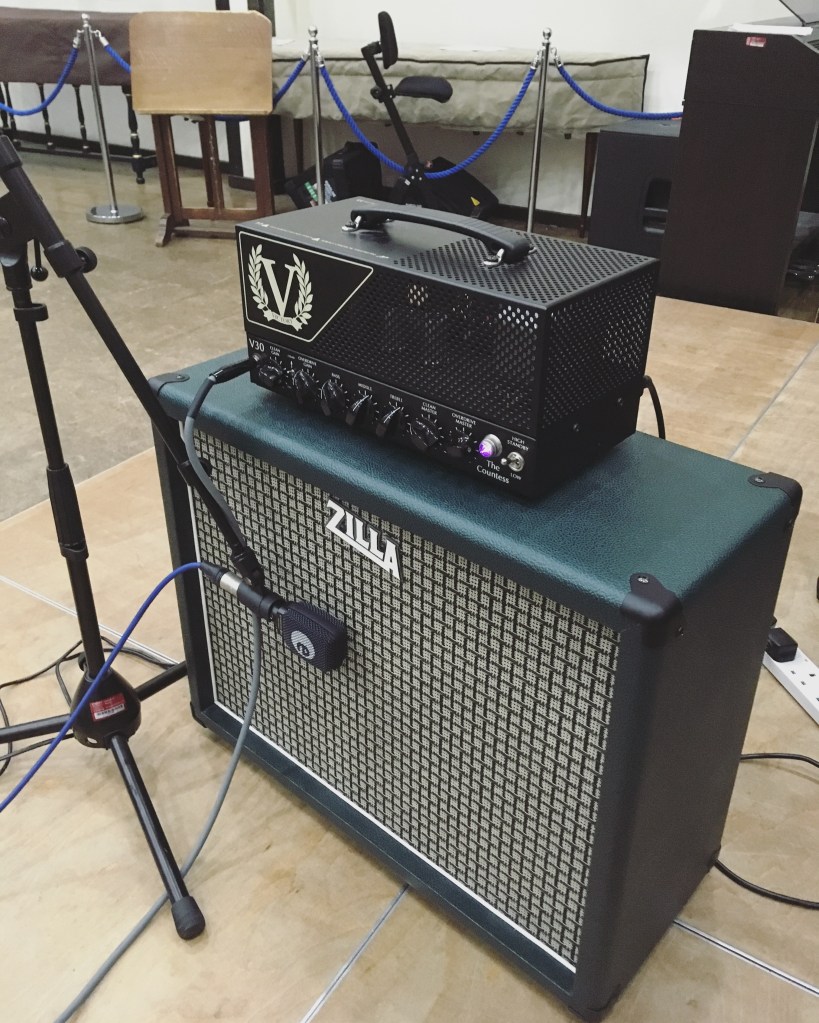
All electric guitars were recorded using a Sennheiser E906 to close mic my custom 1×12 cabinet by Zilla. The Celestion Creamback 75 speaker contributes to the vintage tones, as does the Victory V30 amplifier. I experimented with several guitars but in the end, the entire record was recorded on my 2003 Gibson Les Paul Standard, for the warm cleans and heavier parts, and my 2003 Fender Stratocaster ’57 Reissue for the Gilmore-esque leads, shimmering cleans and screaming solos.
I feel that the use of some room mics in a nice sounding room would have added depth to the recordings but due to the fact I had to record in my flat, the room tone was not good enough to achieve this.
Acoustic Guitars
For this, I used a stereo pair of Shure SM81s for ‘Voices On the Tapes’ and a stereo pair of AKG C414s on ‘Enough’ and ‘Can’t You Tell?’. This was simply a case of what was available from the university stores but it worked out excellently as the clearer highs picked up by the C414s allowed the acoustic guitars to sit nicely within the denser mixes of those tracks whereas the warmth of the SM81s sounded excellent as the acoustic guitar provides the body of ‘Voices On the Tapes’.
The microphones were positioned around six to eight inches from the lower bout and octave harmonic fret (varying due to capo use) to create a rich, full tone that varies across the stereo field.
Saxophone
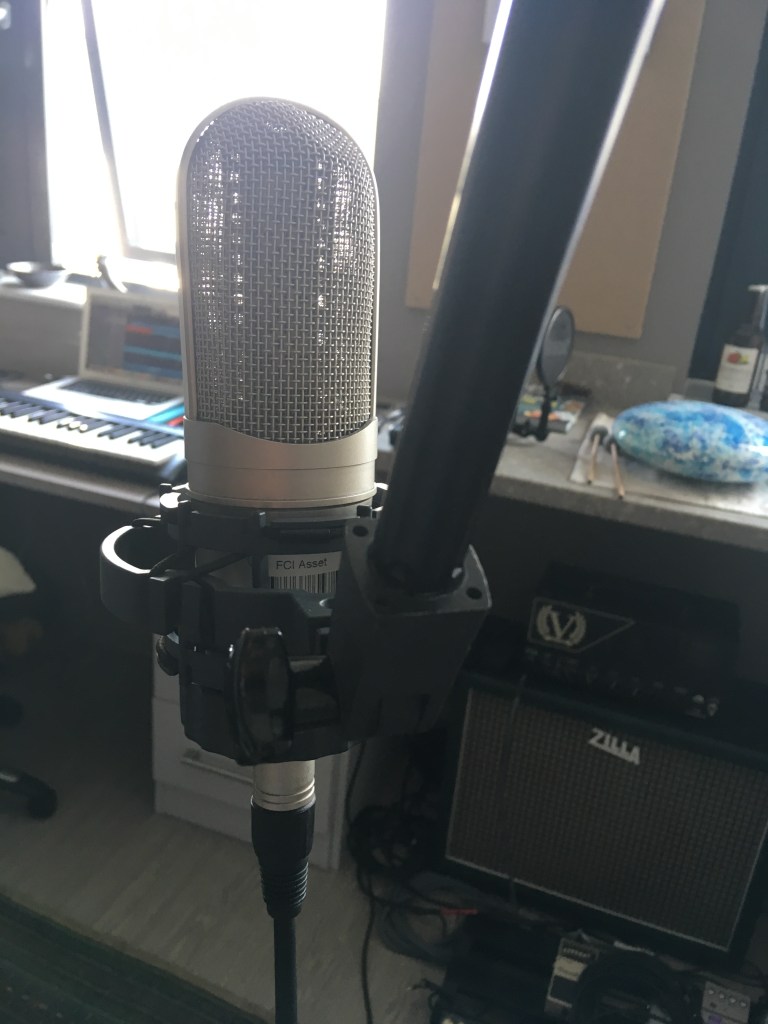
An Audio-Technica AT4080 was my choice here, placed around a foot from the saxophone facing the keys and slightly off axis. This is a classic choice for this purpose and has produced what is probably my favourite capture of the whole record.
Vocals and Spoken Voices
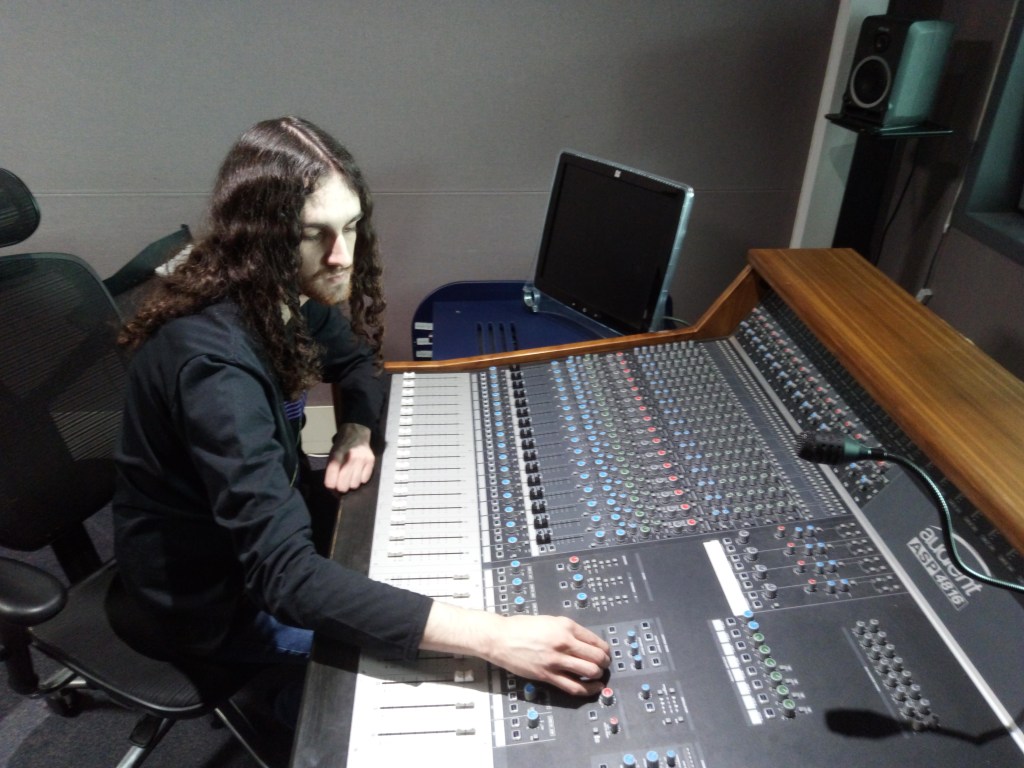
Again, due to restrictions with bookings, the microphones and rooms used here varied. Both mine and Klementyna’s vocals on ‘Can’t You Tell?’ were recorded using a Neuman U87 and the voice on ‘Senses Intertwined’ used a Neuman TLM103, both in an acoustically treated room. The rest of the album used a Røde NT1A in more open space. However, to try and counter this, I used other dampening methods such as hanging jackets and other softened boards around to break up the room.
Sound Effects
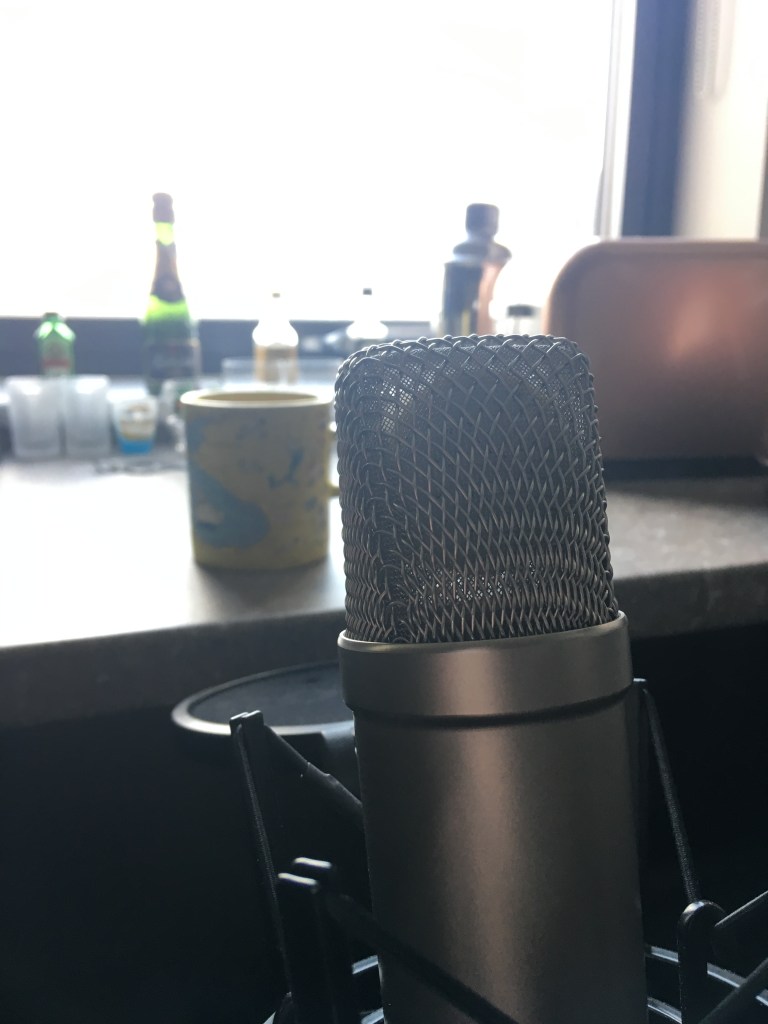
The pouring of the kettle was recorded with my Røde NT1A about three feet from the mug. I decided not to include a teabag as, upon experimentation, I found that the paper would cause some unpleasant high frequency noises when the water landed on it. I made sure to fade this out quickly as the sound lost its impact when it strayed into the next line of the speech.

 What Colours Do You Hear?