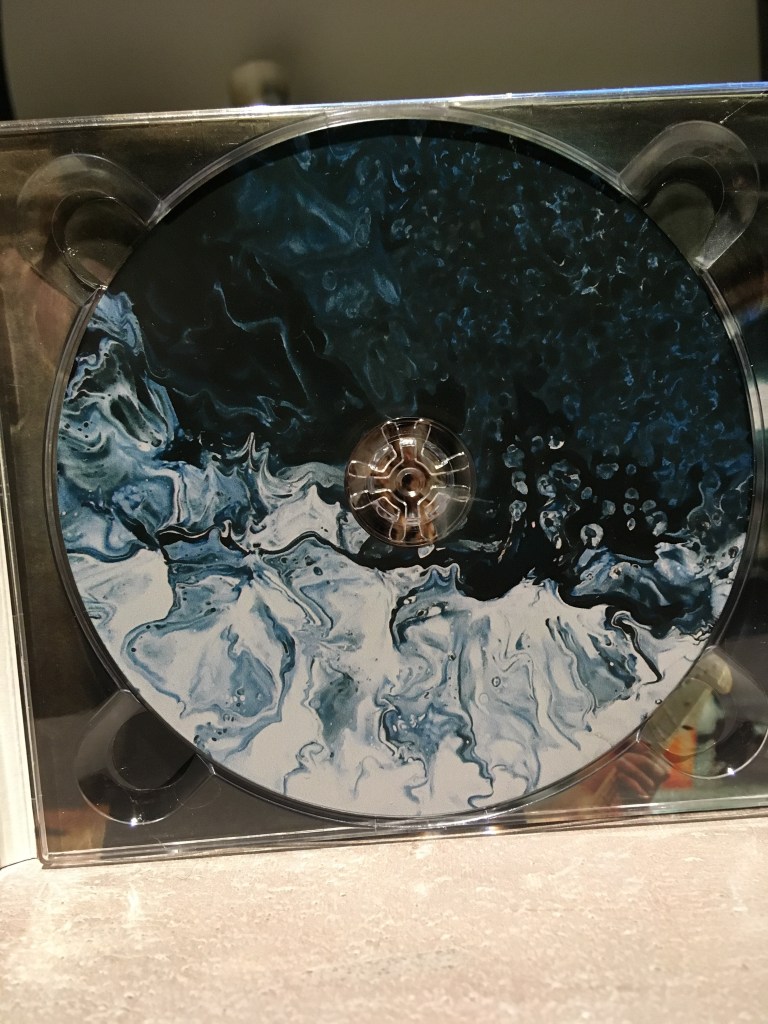
I am extremely happy with the way the products have come out in their final form. Next time, I will talk to the printing company about the art format as the print on the CD is slightly colour shifted towards green compared to the cover. However, having checked the transitions, I am happy.
Author: jedmr
Reaction Case Study – Iona Cant
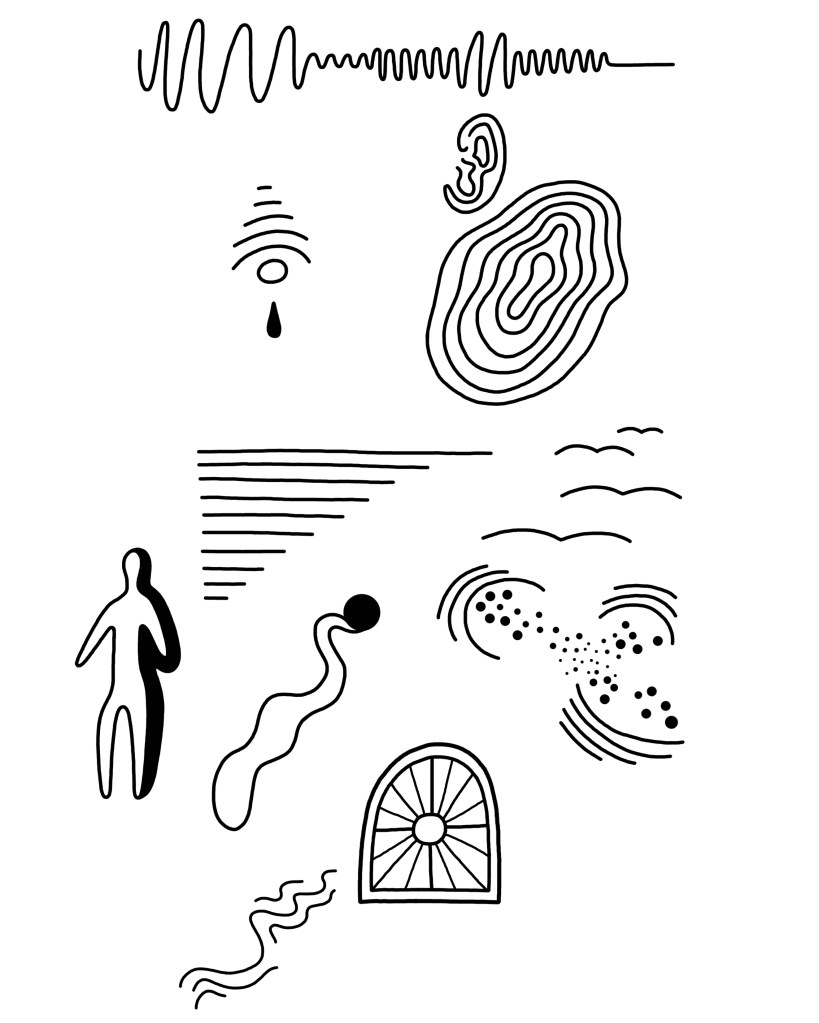
After hearing the final master, artist Iona Cant responded to the tracks with a few sketches to form part of the deluxe edition discussed in the ‘Release Plan’ section of this blog. She also had a few interesting comments which proved the success of the music in relaying its concept. I have written permission to use her words.
I had not explained the concept to her in any way, I simply sent her a link to the EP. Her response: “This is what came to mind while listening to ‘a memory’! Like feeling really disembodied and like a steadiness & security which is what I always think of when I see repeated lines. Also patterns of feelings which also adds to the sense of comfort /security – like the obscurity of a dream but also the familiarity of a dream.”
The fact that she mentions dreams and feeling disembodied shows that this is clearly a dream sequence. The feelings of steadiness, security and comfort are in line with the fact that this is a positive memory in amongst a plethora of uneasy feelings for the main character. The reference to patterns of feelings, which is also very much a part of what I was trying to portray through the transition between contrasting sounds, also exemplifies the effectiveness of the music to transmit its meaning.
Release Plan
Due to the fact that this project is as much an art piece as a record, I feel that vinyl would be the best medium for the pressing. This is because the large format would best show off the amazing artwork from Annie Cutler and the aesthetic of the music fits the time period where vinyl was the main medium for music. My tutor suggested that I pay a visit to Dusty Fingers record shop in High Street Arcade, Cardiff as he had heard they press limited runs in house. Unfortunately, the pressing house was separate and had moved. In addition, they press artwork to the actual LP rather than just pressing standard vinyl. This could be an interesting way to further the idea of an art piece. After contacting them, I found that they will only print one side of the vinyl and so this will not work for the purposes of this project.
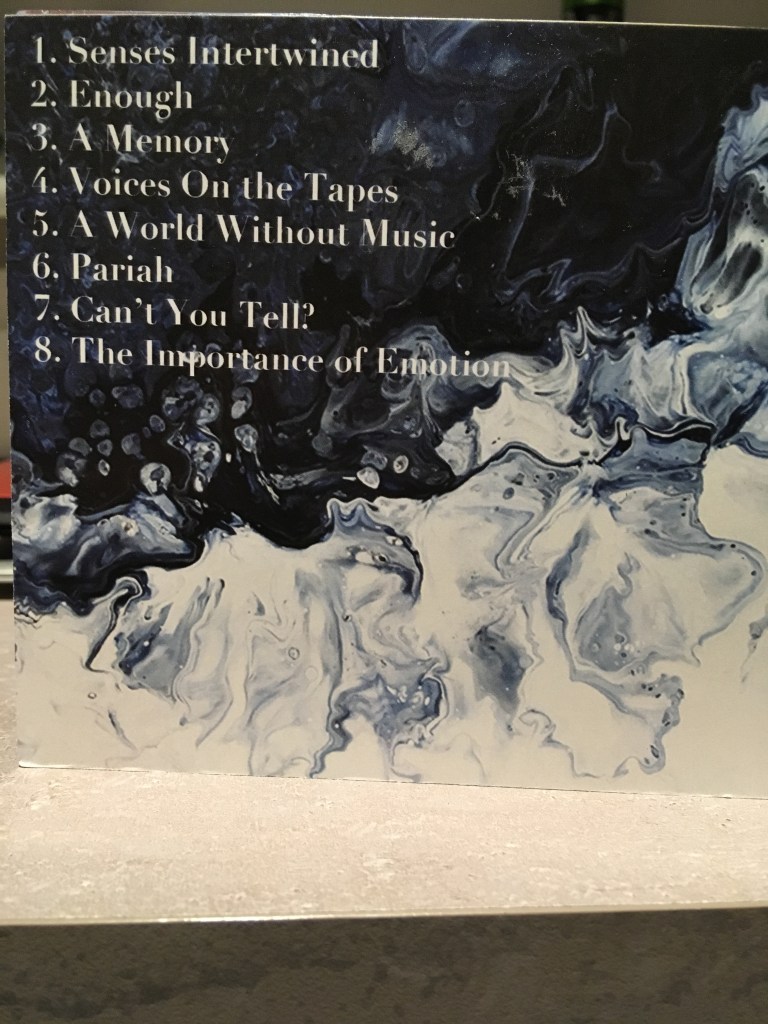
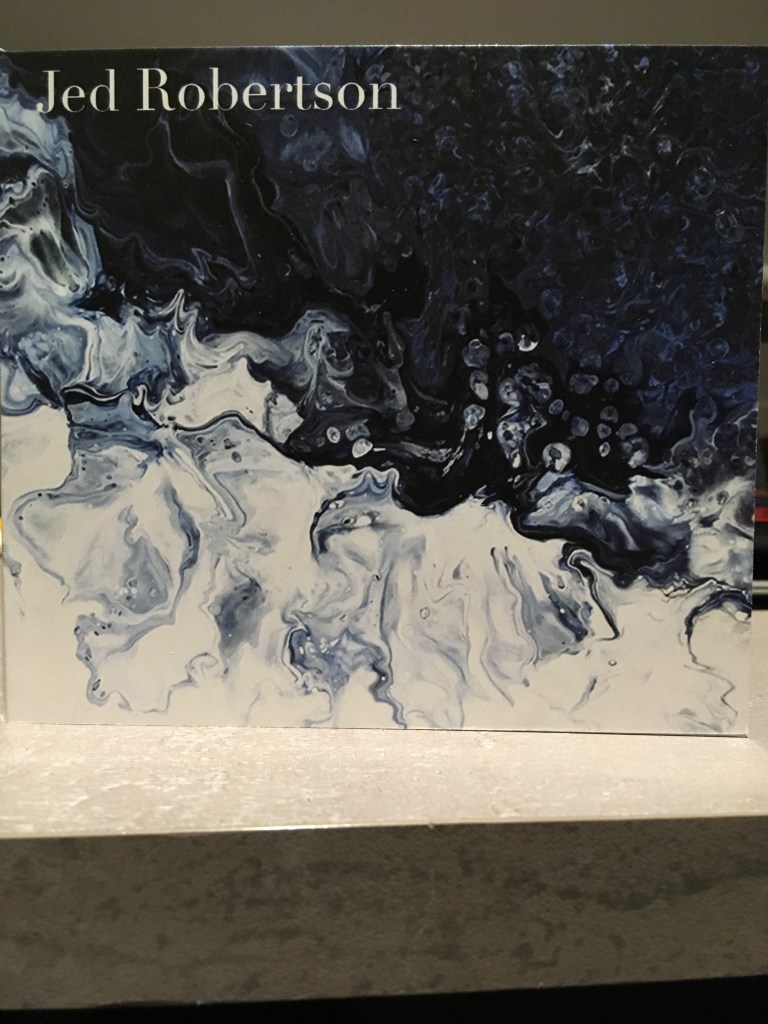
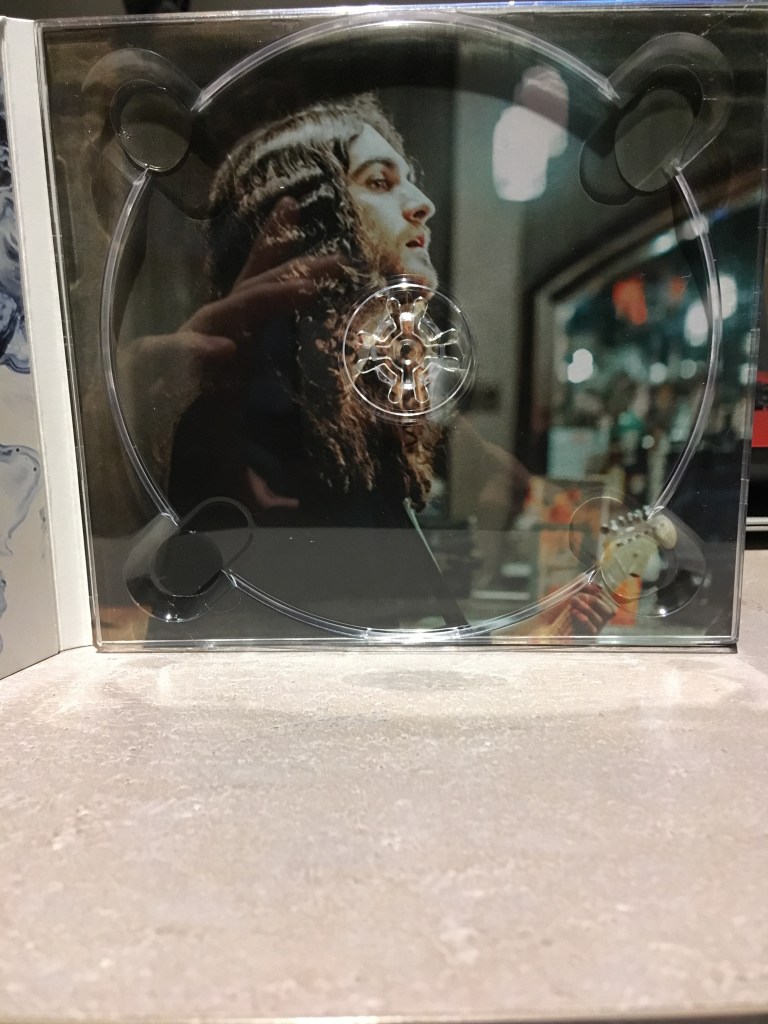
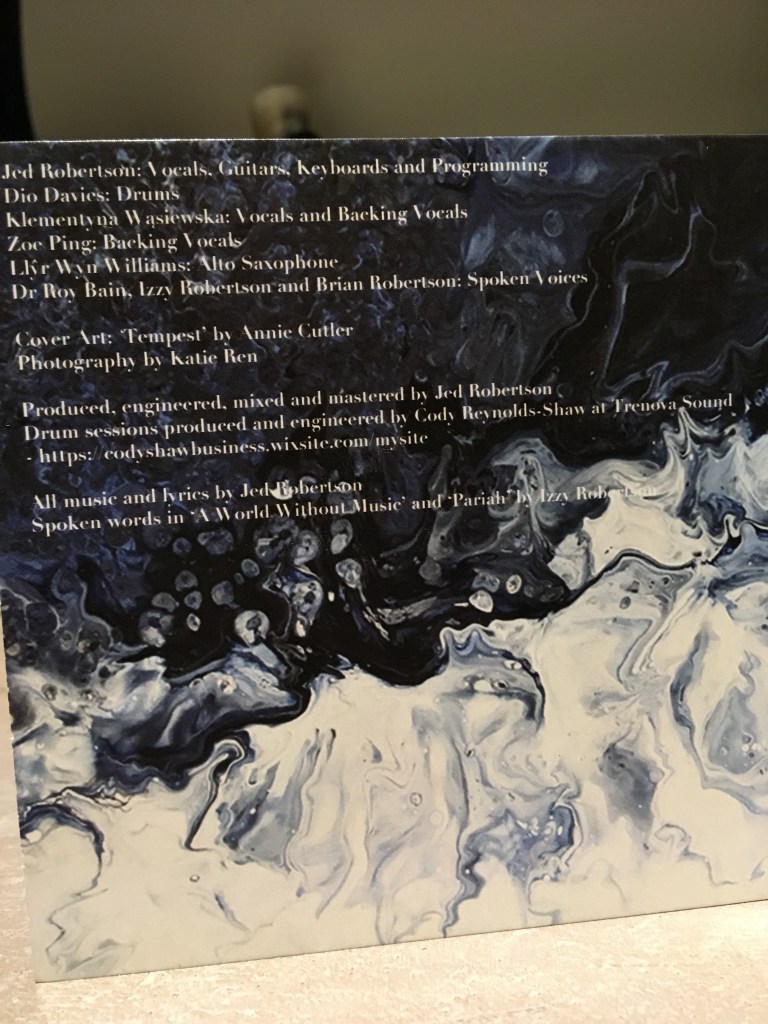
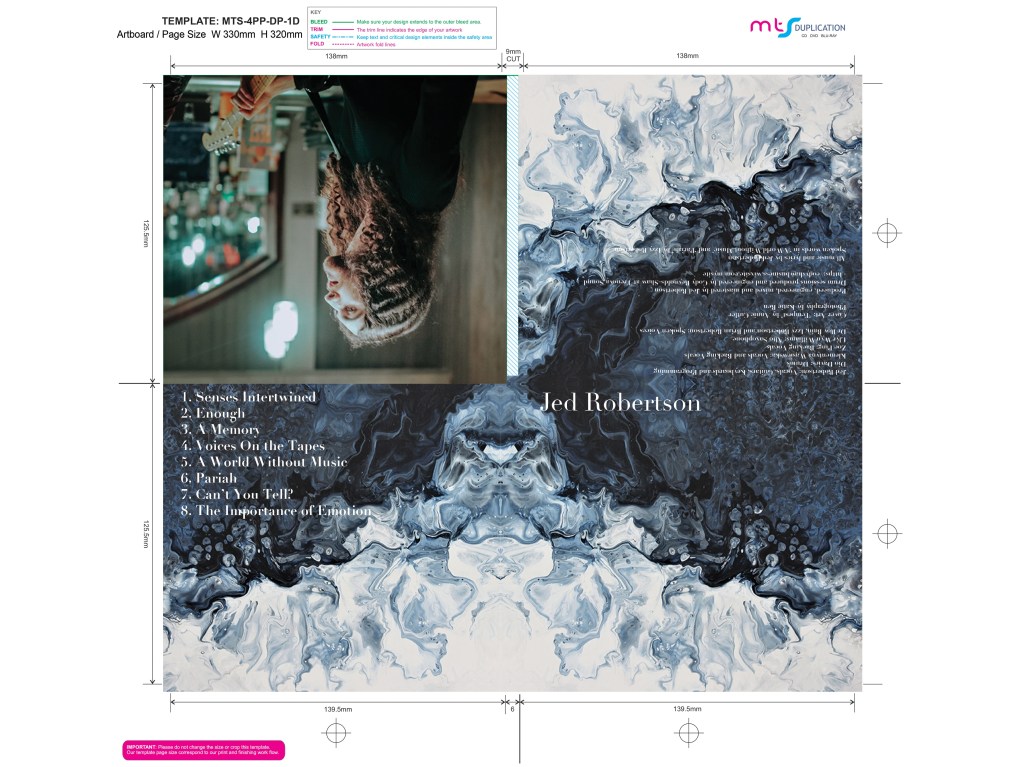
My tutor also found a CD printing company called M-T-S Duplication that have a forty-eight-hour turnaround time. I decided that a ‘digipack’ would also be a good way to show off the art as the continuous panels and lack of plastic to distort the visual would feel similar to a vinyl cover. In addition, plastic cases are very flimsy and breakable and plastic is a material that we need to begin phasing out. I contacted them to confirm this and they sent me the templates which I assembled with the artwork in Photoshop before having them checked. The front cover features the artwork with just my name as I have decided to leave the EP without a title. This is mirrored on the back with the track listing, the image connecting on the spine to give a tessellating appearance. The inside front features the album credits and sleeve notes and behind the CD holder is a photograph of me performing taken by the wonderful Katie Ren. The CD itself will also feature a segment of the artwork.
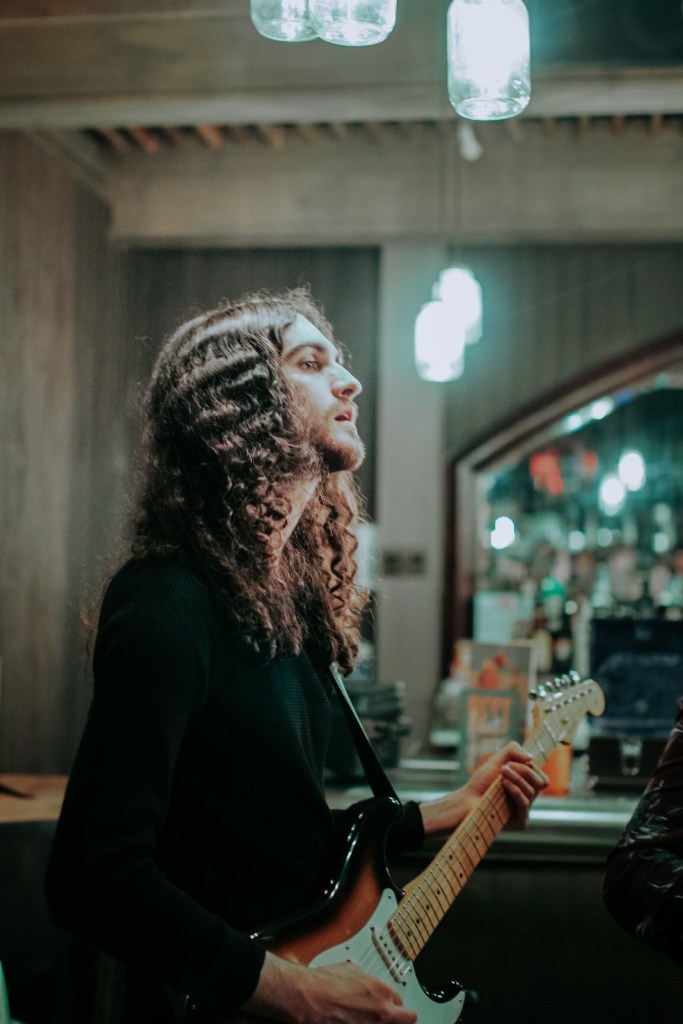
As was discussed in my research project, I will ask artists to create little sketches in response to the tracks that can be included in a special or deluxe edition in the form of stickers, patches and/or badges. This is a different way of going about the idea of a limited edition release as they would usually just contain bonus tracks and expanded sleeve notes. This will create a more engaging and exciting experience for the buyer. This special edition may be something that is received by those who pre-order the EP, giving an incentive and making each pre-order copy a one of a kind item that will not be available again. The buyer also has something to show off the fact that they pre-ordered that is separate to the CD itself. The deluxe edition would include an extra written note from me about some of the meanings, a random selection of the stickers to make it unique, and possibly a live version of one or both singles. Some examples of the drawings can be seen here and more would have been created if it wasn’t for that fact that many of my artistic friends are under the same time constraints as me. I will have the individual pictures signed so that each print credits the artist.
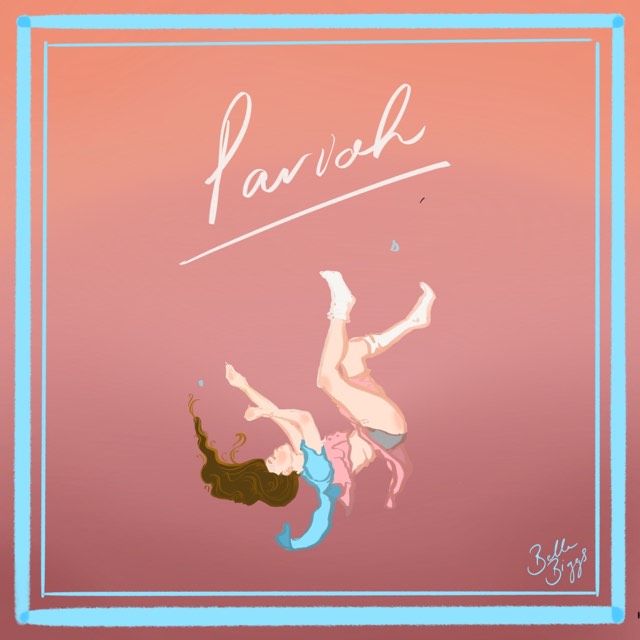
The singles for the release would be ‘Can’t You Tell?’ and ‘Voices On the Tapes’ as they are the right length and structure for this purpose while still giving an idea of the overall tone and feel of the record. Due to the fact that this is only an EP and not an album, two singles may be giving too much away but this would be a conversation to be had with the label or other officials when planning the real release.
Production Techniques
Electric Guitars
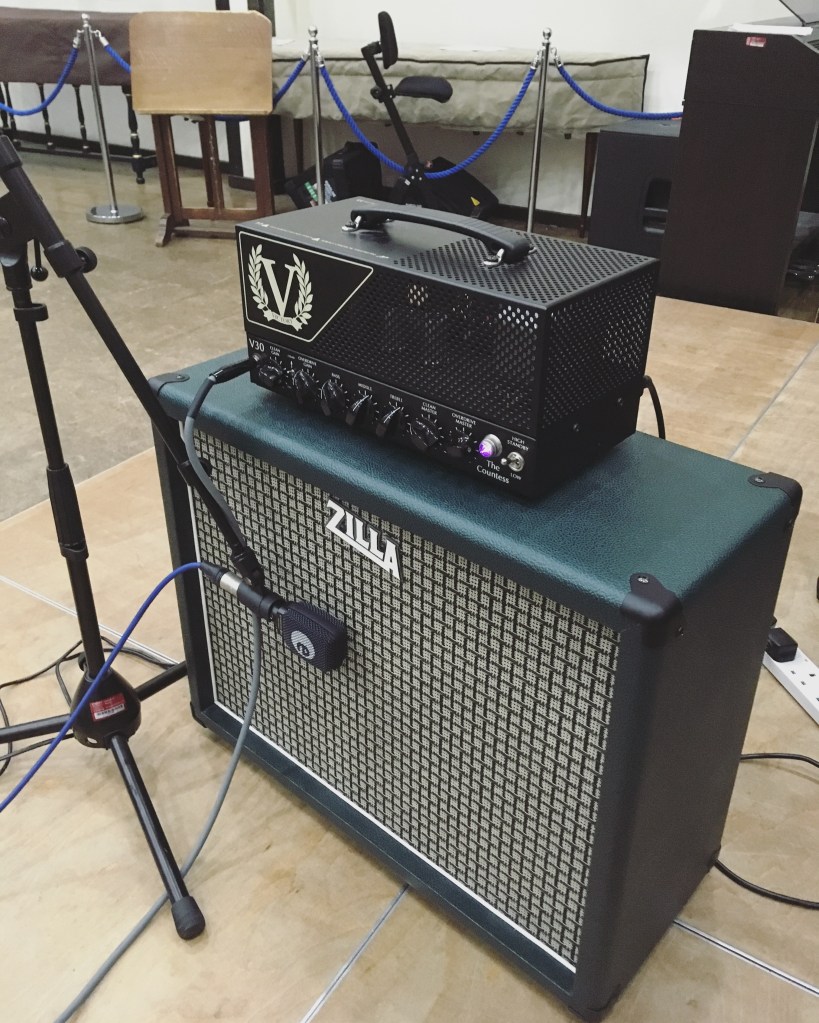
All electric guitars were recorded using a Sennheiser E906 to close mic my custom 1×12 cabinet by Zilla. The Celestion Creamback 75 speaker contributes to the vintage tones, as does the Victory V30 amplifier. I experimented with several guitars but in the end, the entire record was recorded on my 2003 Gibson Les Paul Standard, for the warm cleans and heavier parts, and my 2003 Fender Stratocaster ’57 Reissue for the Gilmore-esque leads, shimmering cleans and screaming solos.
I feel that the use of some room mics in a nice sounding room would have added depth to the recordings but due to the fact I had to record in my flat, the room tone was not good enough to achieve this.
Acoustic Guitars
For this, I used a stereo pair of Shure SM81s for ‘Voices On the Tapes’ and a stereo pair of AKG C414s on ‘Enough’ and ‘Can’t You Tell?’. This was simply a case of what was available from the university stores but it worked out excellently as the clearer highs picked up by the C414s allowed the acoustic guitars to sit nicely within the denser mixes of those tracks whereas the warmth of the SM81s sounded excellent as the acoustic guitar provides the body of ‘Voices On the Tapes’.
The microphones were positioned around six to eight inches from the lower bout and octave harmonic fret (varying due to capo use) to create a rich, full tone that varies across the stereo field.
Saxophone
An Audio-Technica AT4080 was my choice here, placed around a foot from the saxophone facing the keys and slightly off axis. This is a classic choice for this purpose and has produced what is probably my favourite capture of the whole record.
Vocals and Spoken Voices
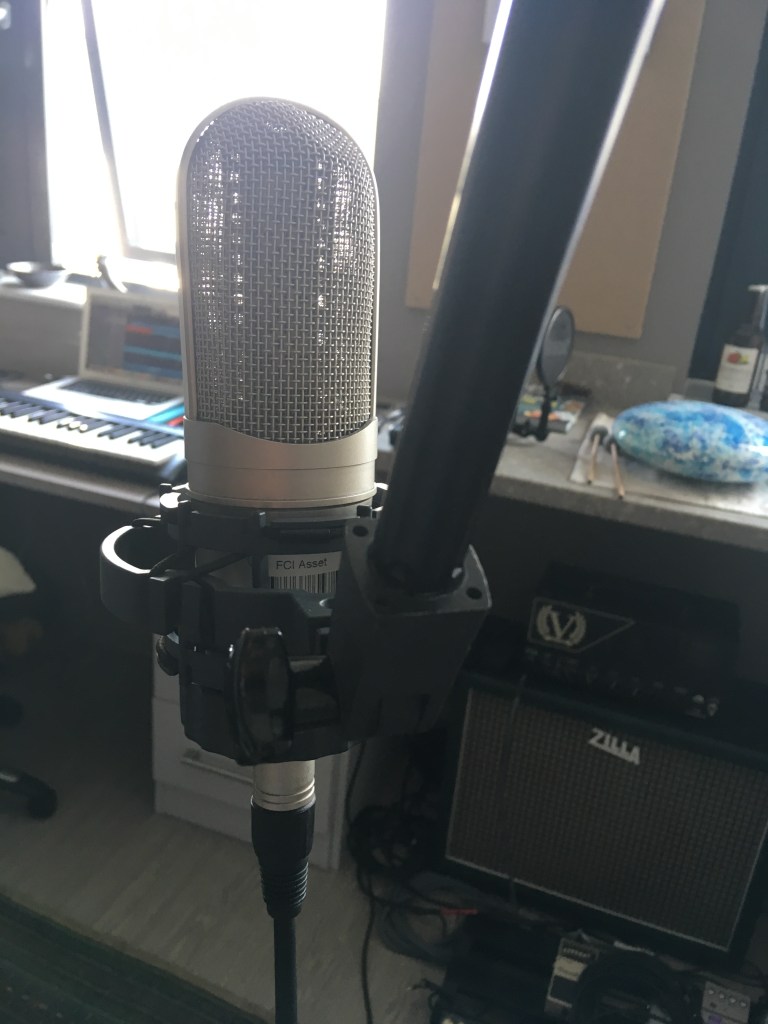
Again, due to restrictions with bookings, the microphones and rooms used here varied. Both mine and Klementyna’s vocals on ‘Can’t You Tell?’ were recorded using a Neuman U87 and the voice on ‘Senses Intertwined’ used a Neuman TLM103, both in an acoustically treated room. The rest of the album used a Røde NT1A in more open space. However, to try and counter this, I used other dampening methods such as hanging jackets and other softened boards around to break up the room.
Sound Effects
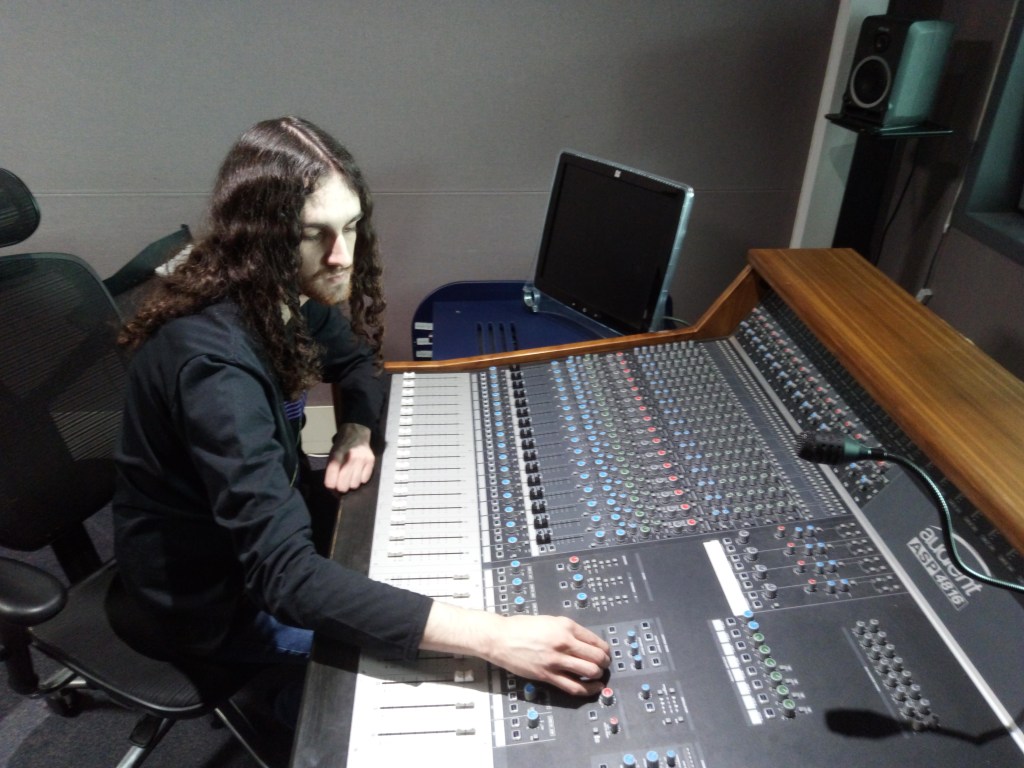
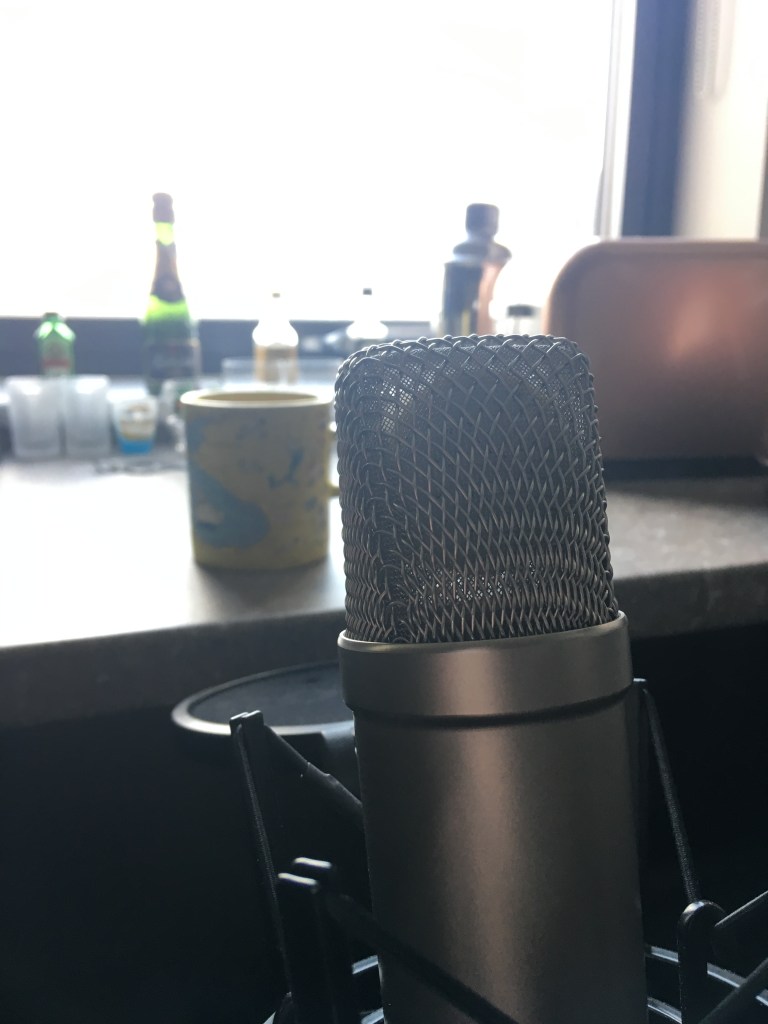
The pouring of the kettle was recorded with my Røde NT1A about three feet from the mug. I decided not to include a teabag as, upon experimentation, I found that the paper would cause some unpleasant high frequency noises when the water landed on it. I made sure to fade this out quickly as the sound lost its impact when it strayed into the next line of the speech.
What could I do differently in the future?
My experience and expertise with mixing do not match that of my songwriting and my knowledge of mastering is further below that. Given more time and a budget, I would have a professional perform both these tasks to enhance the sound of the record. The drum sound in ‘Pariah’ is quite far below my expectations and sounds comparatively small. Luckily, this fits the 70’s aesthetic and so is not much of a detriment to the work but I am sure that a more experienced mix engineer would have been able to achieve the desired sound. In terms of the master, while the mid/side EQ and transitions sound fine, I struggled to reach the desired loudness which, while not the end of the world, may affect play on the radio or in a car. Using modern reference tracks from artists such as Steven Wilson and Anathema showed this, but I reached a similar level to older masters such as Pink Floyd’s ‘Wish You Were Here’.
I would also have liked to use some of the studio hardware for the delay manipulations instead of plugins, this would have been much more authentic to the era I was trying to pay homage to and would have had a more organic and exiting character. However, due to time and studio availability, this wasn’t possible. Ideally, I would have recorded all the elements in a studio environment as the subtle tonal clarity the acoustic tuning can bring would have had a cumulative effect on the record.
In the event of another similar production. I feel the presence of a co-producer across all aspects of the recording process would be a great way to enhance the sound of the EP. Songs such as Pariah were lacking depth which could have been enhanced by another pair of ears and an extended knowledge base.
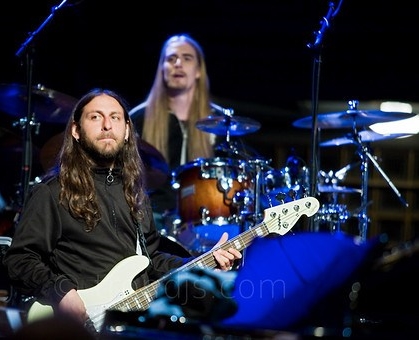
I would also like to assemble a full band to perform on the record. I would still handle guitar duties and much of the keyboard work, but a more proficient player could be featured on the complex piano parts. Also, a different bassist may bring an added life to the work, especially if time was spent with the drummer in order to lock in parts. This is especially potent if the musicians have worked together before and are familiar with each other’s styles. Opeth, a big influence on the EP, often use this technique, the bassist and drummer will spend a few days in the studio working on parts without the other instruments.
Cultural Significance
The occurrence of tensions between friends is, unfortunately, often a by-product of stress and is very common during one’s time at university. For this reason, the concept is quite relevant to each of the contributors and this was an inspiration during the writing process.
While the concept and lyrics do not address any political or cultural issues, I think this work is an excellent example of how wonderful collaboration can be and how much it can add to a project. There are contributors from Scotland, Wales, England, Germany, Poland and Australia. Critique from a South African, a Canadian, an American and an Australian enhanced my confidence in certain aspects and really showed this to be greater than the sum of its parts. While the nationality and race of the performers is irrelevant really, in the current political climate I feel that it is particularly important to remember how great things can be when we work together.
A friend said that she loved the effect Klementyna’s Polish accent had on ‘Can’t You Tell?’, remarking that it gave a melancholic vibe to the track. This was not something I thought about when deciding to ask her to sing on it, but it shows the beauty of this kind of project. Each person who listens will pick up on different nuances that mean something to them or that make them feel a certain way and this again proves that music is a universal language that doesn’t discriminate against any race, age, gender or any other identifying factor.
Song By Song
Senses Intertwined
This acts as an introduction to the EP and introduces the concept of a person lost in thought or daydreaming while listening to the radio. We hear the diegetic radio sounds and the first of our characters.
Our voice on the radio reads the following script, explaining the phenomenon known as synaesthesia, ending with a poem in order to introduce the artistic notion.
“Synaesthesia is the name given to a perceptual condition in which the stimulation of one sense triggers an automatic, involuntary response in another. Those who experience this may not just hear a person’s voice, but also feel it as a touch on the arm or see shapes in the mind’s eye. The smell of freshly cut grass may conjure the sound of music, as may your morning cup of tea. Even a name may bring forth a barrage of sensory experience.
We are red with anger, green with envy or white with fear. So I ask. What colours do you hear?“
Enough
This is the first musical track and is non-diegetic to the setting of the concept. It is the manifestation of the first thoughts our listener has while thinking to themselves. Lyrically, it covers the feeling of guilt someone might feel if they upset a person, even if what they did was noble or right.
It begins softly with a melancholic soundworld of acoustic guitar, Mellotron flutes and clean electric guitar (utilising the ‘Lonely Swede’ tone made famous by Opeth and Steven Wilson, a neck humbucker with the tone rolled back to half). This then escalates into a classic progressive rock ending featuring a saxophone solo from Llŷr Wyn Williams. This simulates the way the feeling of guilt and sadness may transform into anger or frustration at the injustice of the situation. The layered arpeggios, while in a different key, are from the original proof of concept I wrote for the record and help to build the idea of a dreamscape due to the shimmering nature of the harmony they create.
“I know that it’s a lot for you to take
And I hate to be a burden, but I’m scared
Hindsight is the shadow on my mind
For no matter what you do it’s always there
I don’t deserve your love
And I can never give enough
I never wanted this yet here I am
The future so uncertain, yet closer every day
The lights that you see in my eyes are embers
Old fears have ripped the radiance from me
I didn’t understand
Now it’s way out of my hands
Though confidence I feign
I just want my peace again“
A Memory
The only instrumental on the EP, our listener has managed to quell his upset and is now thinking about a particular event, perhaps involving the person he was previously thinking about. I created a synth bed using a sound that is similar in ways to the String Machines of the 1970s. This combined with a Hammond B3 made for a bed with a pulsing movement due to the rotary cabinet and parallel fifths. The chord used was a sus2 over multiple octaves so as to give a sense of neither positivity or negativity. This ambiguity adds to the idea of a dream. Over this I added sound effects such as waves and gulls and used my guitar to create whale sounds. Perhaps this was a day out by the sea.
To add musical interest, I added a theme played by the piano in octaves. This was drenched in a lush reverb and also reversed as an echo to make this feel like a dreamscape rather than a current event. This was followed by an ambient guitar improvisation with the reversed piano returning and delay time manipulation creating other dream like sounds.
While the synth bed creates the basis of the dream, the transitions between contrasting sounds and instrumental timbres simulate the sometimes erratic nature of human thought.
Voices On the Tapes
I wrote this as a break from the long, extended and non-standard song structures that make up most of the rest of the record. This was inspired by songs such as ‘Transience’ by Steven Wilson from his album Hand. Cannot. Erase. It uses the DADGAD tuning on the acoustic guitar as I felt a lilting, folky feel would add a nice new emotion to the range displayed throughout the record. I added some rich three-part harmonies during the creation of the demo but felt that it sounded a little bit flat with all parts being sung by me. I asked Zoe Ping to contribute some vocals here as the softness of her voice and the contrast of our ranges would enrich the tonal palate of the number. This worked wonderfully and I feel the choruses in this track are a highlight of the work. An extract of the isolated vocals can be found below.
Lyrically, this track voices the confusion felt after a relationship ends but the other person continues to publicly show aspects of their tastes that you introduced to them such as a band or album and to keep doing this with each consecutive relationship.
“What do you see when you look around?
Are you going nowhere at the speed of sound?
Day by day this life it takes its toll
So you find yourself another soul
Are the faces all you’ll ever remember
Along with the voices on the tapes?
What do you feel when you look at me?
Is there something more that I should see?
I can take the truth so rest assured
Common courtesy is all I’m looking for
Are the faces all you’ll ever remember
Along with the voices on the tapes?
Are the faces all you’ll ever remember
Along with the voices on the tapes?
And when the record has worn through
Will it make you think again?“
A World Without Music
Originally, this formed the beginning of ‘Pariah’ but I later decided that it would make a nice interlude as it is placed in the middle of the record. The words here were written by Izzy Robertson after I provided her with a brief (discussed in the Creating the Voices, Characters and Setting section). Unlike those on the radio, this voice is non-diegetic like the music and so I decided not to filter it as it would be clear in the head of the character.
The piano sound used here is from the SoniVox EightyEight module. It simulates the sound of a grand with the practice pedal held down, creating a dark and muted sound and lonely atmosphere.
“A world without music is a world with a hole in its heart. Music is the pulse that underpins so much in our lives, experience and emotion; it runs through our beings like the blood through our veins and speaks to us in a universal language. It brings strangers together, it unifies people across language, cultures and continents.
You know that feeling. When you hear those chords and the hairs on the back of your neck stand on end and suddenly you’re somewhere else completely. You are swept away, perhaps to somewhere new, but sometimes to a place of memory, the music woven inextricably into your being with the silken threads of melody.
I’m never sure if my mood dictates the music I listen to, or if the music dictates my mood. A bit of both, maybe. Is there anyone who hasn’t been touched by music in some way?“
Pariah
This flows directly from ‘A World Without Music’ and also uses the same piano sound and spoken voice. Later on, a second piano layer is added to help it cut through the fuller instrumentation. This features a high pass filter and a phaser for intrigue. The sections of the track that feature drums are heavily tom driven, I wanted this to add dynamic power to these sections of the track.
The lyrics here again describe the loss of a friend but this time due to the toxic behaviour of a mutual contact. The end of the chorus is sent to a delay unit that is made to self-oscillate and fade in a burst of sound to give the impression that these feelings are subsiding and being replaced by fond memories of the friend as the spoken voice returns.
“I’m tired of the way I have become
I live in fear of those who came before
Hindsight will not heal my mind
If the quickest route to pain is through those times
Pariah
You were benign
Pariah
The fault is mine
Twisted, is your view of things you see
The whispers in your ear are there to break me
Let’s stay here
Between the mangled truths
I’ll leave it up to you who you believe
Pariah
You were benign
Pariah
The fault is mine
The notes dance like stars, glittering constellations in a sky of silence. Colours swirl and coalesce, landscapes appear and disappear, people wander in and become as familiar as your friends. You might feel a breeze on your skin or smell the dirty city air. You might even fall in love and all in the space of a song. Music is magic.
And though we still remain
The empathy is gone
It couldn’t be contained
And so we soldier on
Haunting notes pipe through soft, lazy summer air. The leaves shimmer silver as the slightest breeze stirs them. Otherwise, everything is still. The insects settle on flower and twig to listen. The birds fall silent. Small paws pause mid step, whiskers twitch. The world stops, just for a moment, as the music passes through.“
Can’t You Tell?
This is the last of the songs on the EP, it is a reworked version of a track that was written last year. To place it in the soundworld of the work, I added a multitude of ambient layers such as synth pads, guitars sent through delays set to self-oscillate and bell effects. I also manipulated the EQ on many of the recorded parts to make them sound similar to the other tracks. I considered replacing the electronic drums with an acoustic kit but decided that this might be a nice variation and left it. This was also partially inspired Steven Wilson’s ‘Ancestral’ which uses a similar drum sound within a progressive rock album.
As well as the ambient layers, this track features interlocking parts that play against each other to add to the dream like feel. The acoustic guitar and piano arpeggios are on the same beat on the first repetition but the piano is then rhythmically transposed by a quaver creating a shifting feel as they are panned on opposite sides. Later on, a celeste part is added which furthers this. Harmonically, each of these adds extensions to the chords adding to the richness.
It also features Klementyna Wąsiewska on lead vocals. Originally, this was due to the fact that I struggled to play it and sing it at the same time during performances and while this is no longer the case, I fell in love with the way her voice sounded on this particular track and so I asked her to sing on the final version.
The lyrics are in a sense, the culmination of all those that came before. Almost pleading with the lost friend to see both sides and realise that there may be fault in their actions.
“Is this the end of you and me
That I see before me now
The strife is too much to bear
I’m blinded by its shroud
Can’t you tell
It’s like all the skin is gone
From my body?
Who are you anymore?
Your words are burning and your thoughts they freeze
Elements assaulting me
My mind is a mess of nostalgia
I don’t know what to believe
Can’t you tell
It’s like all the skin is gone
From my body?
Who are you anymore?“
The Importance of Emotion
To close the EP, we return to the diegetic sound of the radio where the listener wakes from his daydream and switches it off. There is a quiet metallic sound in the radio sample that I considered removing. However, I decided that maybe it would give the sense that the character was sorting himself out before getting up to switch off his radio.
“Sounds mean nothing until you use them in emotional ways. Otherwise, all you have is air, particles moving through space.
Art becomes science, feeling becomes base understanding, and the world loses its colour.“
Creating the Voices, Characters and Settings
Throughout the EP there are multiple characters who produce diegetic and non-diegetic voices. The first is the person who is heard tuning their radio during ‘Senses Intertwined’; their voice is not heard until the very end of the work, but the sounds created by their actions are the first thing heard by a listener to the EP. The use of a sample taken from a vintage Hallicrafters SX-22 radio and the filtering used on the recordings helps to place these scenes somewhere in the mid-70’s.
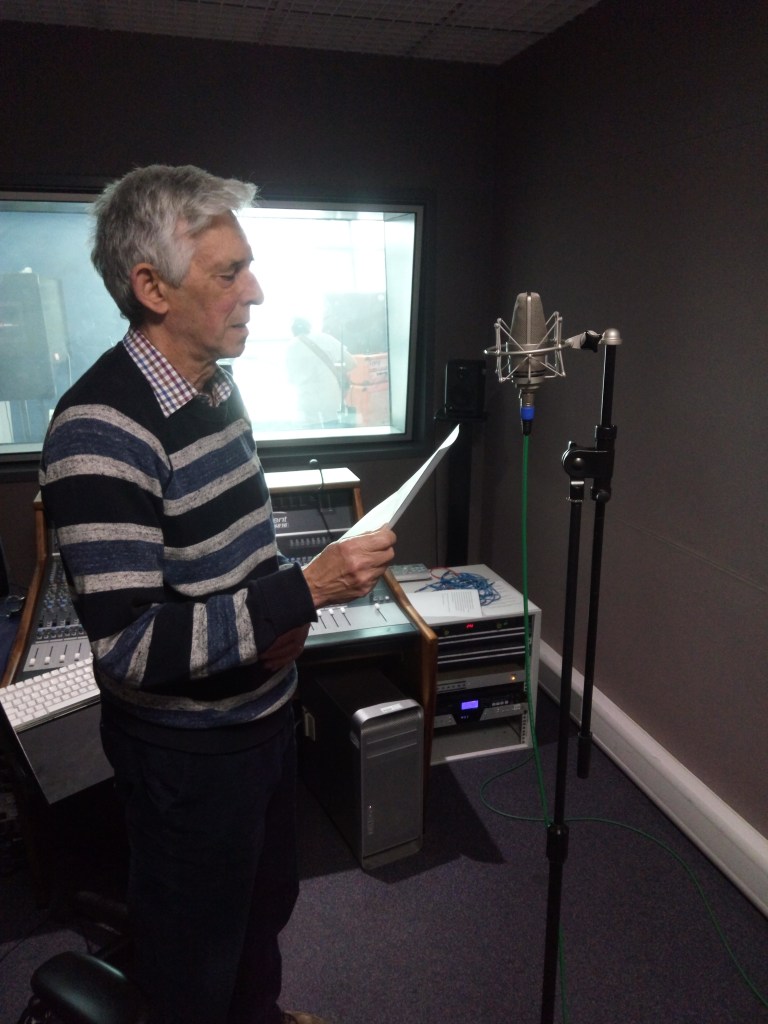
Next is the voice on the radio channel that our first character settles on. He is a psychologist or neuro-scientist of some kind discussing the concept of synaesthesia. I wrote the script for this in quite a poetic manner as I envisaged an eccentric character who enjoys the marriage of art and science. He is voiced by Dr Roy Bain MBE, whose well spoken English accent suits the character and era well. Certain words are enhanced by non-diegetic sounds such as the twinkling celest with echo on the word ‘music’ and the pouring of a kettle on ‘tea’. This same technique is used in ‘Can’t You Tell’ on the word ‘freeze’ where the celeste sound gives the impression of ice.
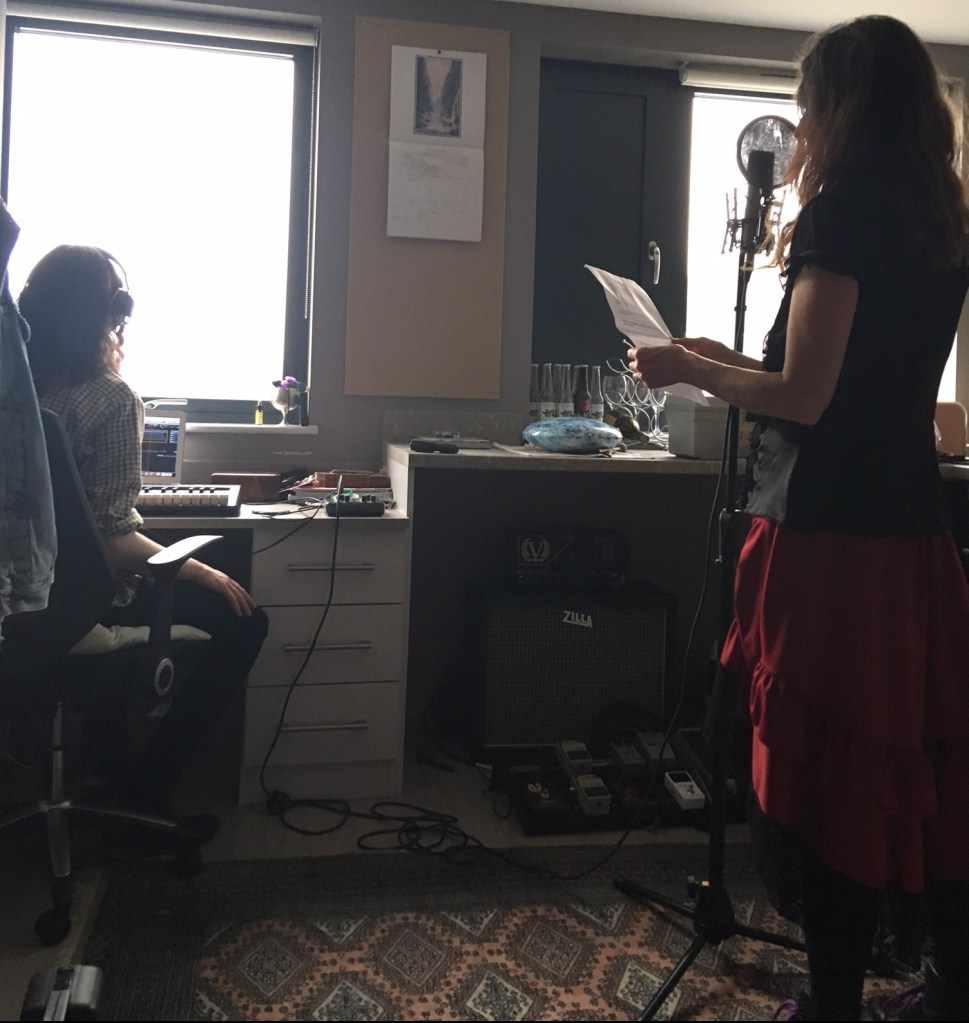
Next comes the sung vocals within the songs. These are not intended to be tracks playing on the radio but manifestations of the thoughts and feelings that our main character may feel while listening. During both ‘A World Without Music’ and ‘Pariah’ another spoken voice is heard, this is again a manifestation, perhaps of a person from our main character’s past. His mother? His sister? His lover? Or someone else entirely? That is up to the listener to decide. The poetry here was written by Izzy Robertson who also voiced the character. I wanted a different tone from the others and so instead of writing it myself, I asked her to write various reactions to the question “what can music make you feel?”
Closing the EP is ‘The Importance of Emotion’ another diegetic piece on the radio. Voiced by Brian Robertson, it features a quote from jazz musician Jacob Collier: “sounds mean nothing until you use them in emotional ways.” I found this particularly inspiring and feel that it encapsulates the theme of entire work. As this finishes, our main character is heard for the first time, in the form of a deep, thoughtful sigh before he switches off the radio.
I manipulated the volume of the radio sample to give the impression of channels coming in and out. The voices and short clips were effected with a band pass filter in the upper mid-range and a light distortion. On the voices, I also automated the frequency of the low cut to match the radio interference. At the end of ‘The Importance of Emotion’ the first switch is intended to be a standby switch and the second, louder one, the off switch. When this is pulled, I set up a short fade-out on the interference sample to simulate the capacitors releasing their charge.
Drum Recording Session
I decided to seek the help of Cody Reynolds-Shaw, a sound engineering student,
for the drum recording session. This was because I felt his knowledge and experience would produce a better capture than mine alone. In addition, his house has a wonderful sounding room for rock drums and after hearing the recordings my friends had done there, I decided this would be a better choice than the drier, boxy university studios. We used fourteen microphones in total, some of which were dropped in the edit as they didn’t add anything to the desired effect. The track listing can be found below.
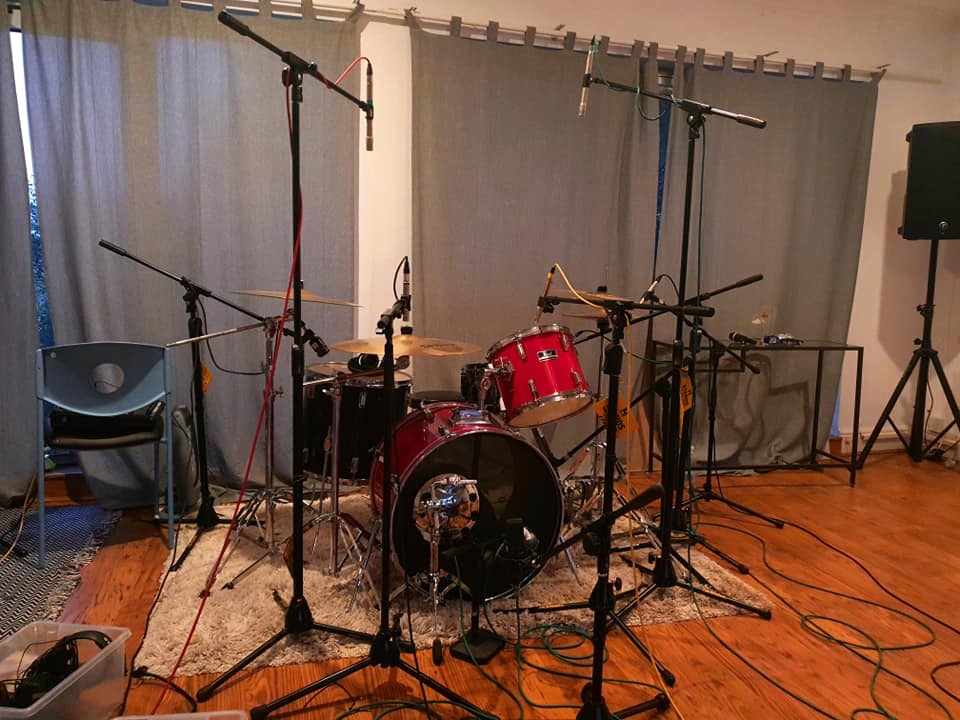
Sub Kick – DW The Moon
Kick Out – Shure Beta 52a
Kick Front – AKG C414 – Dropped as spill made kick less direct and impactful.
Snare Top – Shure Beta 57a
Snare Bottom – Sennheiser MD441U
Rack Tom – Sennheiser C451
Floor Tom – Audix D6
Hats – Røde NT5
OH L – Shure SM81
OH R – Shure SM81
Room L – Audio Technica AT4080
Room R – Audio Technica AT4080
Blumlein Room L – AKG C414 – Dropped as other room mics sounded better.
Blumlein Room R – AKG C414 – Dropped as other room mics sounded better.
Dio Davies was my drummer of choice as I had worked with him before and I thought he would have more time to learn the songs than my fellow third year students. I sent him the demos and briefed him on how I expected him to embellish the sequenced ideas with fills and his own variations.
Unfortunately, he had not learned the songs and so the session was quite slow and the edit was quite a task. Cody said he would be happy to edit and mix this for me but later decided he didn’t have the time. The stems he sent me for ‘Enough’ were partially edited tracks with plugins already applied before the bounce and so this made completing the edit and mix much more difficult. I also wasn’t able to utilise any quantisation as the nature of the gating he had applied made this a huge task that I didn’t feel was worth it. The snare mics were missing many of the ghost notes due to the threshold being set too high. Luckily, the overheads and room mics had picked these up well and so after some careful manipulation, the problem was solved. In future, I will make sure I attend all editing sessions to make sure I can stop these issues from occurring.
When mixing, I went for a mid to late 70’s progressive sound which left the kit quite dry, with only one pair of room mics used quite low in the mix. However, in ‘Pariah’ I wanted a powerful and driving sound from the floor tom rhythms in the vain of ‘Refuge’ by Steven Wilson. For this I added slightly more reverb and placed the floor tom spot mic more prominently in the mix.
The Album Artwork
When I envisioned the artwork, I saw shades of deep blue and white, like a ‘churning sea of emotions’. I had a few artists in mind to realise this vision and was in the process of writing the commission brief when I saw the works my friend Annie Cutler had created for her exhibition at the Welsh Assembly.
I asked about a specific work named ‘Tempest’ which fitted the brief perfectly and she said that while I couldn’t have the canvas until after the exhibition, I could have a digital copy to use in the meantime. We discussed the type of credit she would want and decided that I would include a link to her website in the sleeve notes. However, she hadn’t finished the creation of her website by the time the CDs went to print and so I simply included her name and the title of the work.
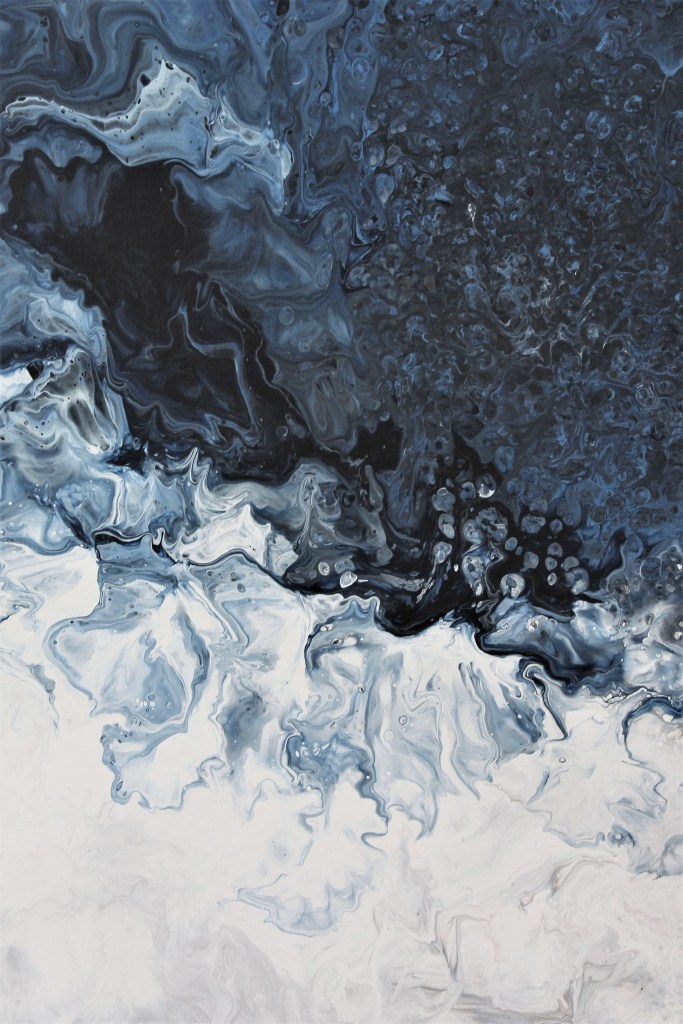
For the font, I wanted something sleek and simple that wouldn’t distract from the artwork. After auditioning a few, I settled on one from the Photoshop. I decided on white text and made sure that it stayed away from the white sections of the cover.
Sleeve Notes
Inside Front:
Jed Robertson: Vocals, Guitars, Keyboards, Bass and Programming
Dio Davies: Drums
Klementyna Wąsiewska: Lead and Backing Vocals
Zoe Ping: Backing Vocals
Llŷr Wyn Williams: Alto Saxophone
Dr Roy Bain, Izzy Robertson and Brian Robertson: Spoken Voices
–
Cover Art: ‘Tempest’ by Annie Cutler
Photography by Katie Ren
–
Produced and engineered by Jed Robertson
Drum sessions produced and engineered by Cody Reynolds-Shaw at Trenova Sound – https://codyshawbusiness.wixsite.com/mysite
–
All music and lyrics by Jed Robertson
Spoken words in ‘A World Without Music’ and ‘Pariah’ by Izzy Robertson
–
Back:
01. Senses Intertwined
02. Enough
03. A Memory
04. Voices on the Tapes
05. A World Without Music
06. Pariah
07. Can’t You Tell?
08. The Importance of Emotion
 What Colours Do You Hear?